Thursday, 3 April 2014

Lost in the Pacific (II)

This is just one of a series of around fifty old newspaper articles that I have been reading. I have been researching from old newspapers and magazines. Covering the last 200 years or so of life on the inland waterways. With particular interest in the major issues of the day that were effecting the canals. The most active periods for evaluation and change, has always been just prior, during and shortly after the two world wars. It should be remembered that between the wars the ownership of some of the canals changed hands as the railway companies bought up the waterways to get reduce competition. What is not clear is the effect this early form of asset stripping had on the viability of the inland waterways. Its good to take a look back at what people were saying and doing in the past. Most surprising of all are some of the problems that beset the canals back then - are still prevalent today. Reading old newspapers can throw up some rather interesting stories. Here is what we would call today a public interest story.

Caveat: Some of the articles are difficult to read and even using modern electronic  scanning and text conversion methods. The odd punctuation, word or character may have been transcribed in error. 

LOST IN THE PACIFIC.

By JOHN EDWIN HOGG.

As I came to the camp and dismounted from my horse I saw Mr. Hutchinson standing there with an expression on his face which caused me to think he was sorely troubled. We exchanged greetings, then he came closer and said I'm awfully sorry, old man; but I've got some bad news for you. Well, Mr. Hutchinson, I said I don't enjoy receiving bad news, but if you're got some, please tell me quickly, there's nothing wrong at home, I hope? No, replied the engineer, to be explicit, you're marooned on these islands for two weeks. I tried to avoid it, but couldn't, so you'll just have to make the best or a bad situation. The Invernada came in yesterday, and today five men who have been seriously ill in the camp hospital for the past week seemed likely to die. The doctor here could do nothing more for them, their lives depended upon their being rushed to proper hospital facilities at Balboa. So we put them aboard the yacht, and she sailed this morning. Before I let her go, I sent six scouting parties into the jungle to try' to find you and bring you back, but they returned this morning reporting they could get no trace of you. In the emergency there was nothing else to do. I'm awfully sorry to upset your plans, but it scorned to be a case of inconveniencing you or letting five men die, so I chose the lesser I evil. You can make yourself at home here and it won't cost you a penny. You can, fish, ride horseback enjoy yourself just as you see fit but you will be unable to leave the islands until the Invernada comes back. which will not be before another fortnight.

This piece of news, unwelcome as it was, was not quite as bad as I had expected. Nevertheless, I felt pretty sorry for myself when I thought upon what an enforced stay of a fortnight in the Pearl Islands meant for me. However. I managed to conceal my true feelings and smile a rather sickly smile. Well, Mr Hutchinson, I said, being left here certainly does throw a bombshell into my carefully laid plans, but it I can't be helped, I suppose. It leaves me in an awful pickle, but I shall have to make the best of it. I would not care much if it were not for just one thing. I have my return passage from Panama to the United States booked on a steamer that is to sail from Balboa for San Francisco just ten days from today. It is the last ship on which I can get home in time to be with my wife when our first baby is born. I came to South America, leaving my wife with her brother in Los Angeles, only upon the strict understanding that I would be home again before the baby arrived. Now, after all my careful planning, it appears that I've set a trap for myself which has dumped all my schemes into the sea. That is why I feel that I ought to get to Balboa to catch that steamer even if I have to paddle on a log. Haven't you got some sort of a boat here that I can get to the mainland on. Or can't we get a message ashore to bring out a boat, or a seaplane any blessed thing that can take me off these islands? I don't care twopence what it costs. I'll draw a thousand dollars, if necessary, from the bank when I get to Balboa for the man who can get me there before my ship sails! 

The engineer listened intently, puffing somewhat nervously at his pipe. He was silent for a moment as if in deep thought. Then he replied, I have no words to tell you how sorry I am that all this has occurred, but that doesn't change the situation one bit. There isn't a boat on this island, nor do I know of one on any neighbouring island, that is fit to make the trip to Balboa with any degree of safety. We have no radio equipment or any other means of getting a message ashore. There is just a possibility that we might be able to signal some passing tramp steamer to stop and take you off, but we have no assurance of such a thing. A steamer might pass to morrow that would stop and pick you up. On the other hand, no vessel may come within sight of the island until it's too late for you to make connections with your ship at Balboa. Fishermen occasionally I come here with yachts or sea-going motor launches from the Panama Canal zone and if one comes you could undoubtedly get them to take you back. But they too are quite uncertain. Just as Hutchinson finished the mess call was sounded at the camp, and the engineer bade me defer further discussion of the subject until after the meal. We adjourned to the mess tent, and I purposely took a seat where I could be as far as possible away from everybody else I wanted to be alone, because I was anxious to think over a plan of escape from my predicament. 

After the violent outdoor exercise I had indulged in that day I should have been ravenously hungry, but I found myself merely picking at my food, my half formed plan, however, took definite shape as I picked up my coffee cup. Simultaneously, a heavy masculine paw slapped me roughly on the shoulder and a voice from behind said "Come now, old man, buck up! It might be worse." The hand and the voice were those of Mr Hutchinson. He sat down at the table beside me, most of the other engineers having gone. Forthwith I began to unfold my scheme to him. Mr. Hutchinson, I said, have you got plenty of gasoline at this camp? Yes, he replied. "Why?" "Well," I responded, "if you've got plenty of gasoline, I want about ten gallons of it. I also want that boat I've been fishing with, the sail that goes with it. A couple of beakers of water, and some food. I'm going to Balboa tomorrow if I have to swim part of the way!

At this the engineer was apparently nonplussed, his eyebrows arched, he looked at me over his spectacles, and then whistled a long drawn note of surprise, "Great Scot!" he cried. "You newspaper reporters arc never irked, are you? So you're going to Balboa in that cockleshell, with a jib-sail and tiny stern winding engine of yours? Well if that's your decision, you're welcome to the boat. I'll give you every possible help, and I reckon you'll either get to balboa or Davy Jones locker! I know I'm contemplating a dangerous trip," I told him. But I can't let my wife think I've deserted her at a time such as she is facing. I'm going to be in Los Angeles by the 15th of April or drown in, the attempt! If I had any way to get word to her it wouldn't be so had but  since that can't be done I'm going to her!

For the next half hour the engineer endeavoured  to argue me out of my determination. He assured me that under normal weather conditions I might be able to get to the Canal zone with the eighteen fool boat, my "vest-pocket" motor, as he called it, and a jib-sail. But, just as emphatically, he declared that if I got caught out in the Gulf of Panama in a 'Papagayo' the sudden wind storms that frequently sweep these tropical seas. I should most certainly be "sunk without trace." Finally, seeing that his arguments were of no avail. Mr. Hutchinson once more promised to give me every assistance in the project. I'll send one of my men with you, he said, but this offer I declined, saying I could see no logical reason for risking a second man's life. If I'm going to get to Balboa at all, I assured him, I can do it by myself quite as well as with another man. On the other hand, if I'm to drowned, I'd better drown alone." 

Ten gallons of gasoline an ample supply for the Evinrude were loaded into the little boat. The twenty-gallon breakers of fresh water were also put aboard, and then a water-tight box of food, sufficient to last me for five days, if necessary, for a much longer period if carefully rationed. That completed the outfit in addition to the personal luggage that I had brought to the islands in the Invernada. With everything ready for the voyage, the boat was anchored out in the bay, ready for me to set off at daylight. 

(Continued in part III) 

Wednesday, 2 April 2014

Galaxy Images.

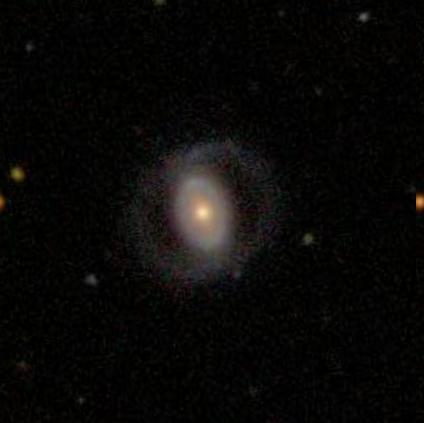
I have been doing a bit of searching through the images on 'Zooniverse.' The idea is that images of galaxies are categorised. This helps the research scientists by doing a low level sort of the images.  Here is a typical image of a Spiral Galaxy. However in this image the arms of the galaxy are very prominent. The galaxy size is about 200,000 light years across and is about twice the size of our own milky way galaxy.


This galaxy is hard to categorise as it seems to be made up of a mixture of two different types. This is not a rare occurrence as galaxies occasionally collide with each other. It has the hallmarks of a globular and spiral mixture. 


This is my favourite image so far. I call it the 'String of Pearls.' It is a spiral galaxy with areas of bright star formation. In the image the pearls seem to be almost equally spaced.  It looked quite different from most of the images I have categorised so far.  So I flagged this image for attention.


Lost in the Pacific (I)

This is just one of a series of around fifty old newspaper articles that I have been reading. I have been researching from old newspapers and magazines. Covering the last 200 years or so of life on the inland waterways. With particular interest in the major issues of the day that were effecting the canals. The most active periods for evaluation and change, has always been just prior, during and shortly after the two world wars. It should be remembered that between the wars the ownership of some of the canals changed hands as the railway companies bought up the waterways to get reduce competition. What is not clear is the effect this early form of asset stripping had on the viability of the inland waterways. Its good to take a look back at what people were saying and doing in the past. Most surprising of all are some of the problems that beset the canals back then - are still prevalent today. Reading old newspapers can throw up some rather interesting stories. Here is what we would call today a public interest story.

Caveat: Some of the articles are difficult to read and even using modern electronic  scanning and text conversion methods. The odd punctuation, word or character may have been transcribed in error. 

A few people commented on the true and amazing 'Story of Bents Green Lodge' from way back in 1888. An old newspaper story that I blogged about a few weeks ago. Well here is another amazing story of coincidences and circumstances but this time, it dates from the 1920's.

I came across this very interesting old newspaper article, which due to the age of the paper and
Sample scanned text
the feint print was quite difficult to read. Here is a sample of the quality of the scanned image. Scanning the text into the computer (to do a scan to text conversion) also proved to be quite problematical. I have spent a great deal of time editing the text by hand and eye. I have not been able to find another source of the text on line. 


The newspaper story is so old that it is out of copyright. In fact the newspaper closed many years ago. However for me it has proved to be a very interesting story from way back in 1923. It's also a story that was well worth reproducing again.

The author John Edwin Hogg has written a book that might interest other boat owners. (Twice Across North America by Motorboat) which as the title suggests is a record of his experiences when crossing the North American continent by boat. The crossing was accomplished using rivers and lakes and included passing through more than twenty state boundary. Copies of the book are available from the usual sources.

The story of being lost in the Pacific seems to be straight out of a 'boys own' magazine of that era. I can imagine that at the time. The story would have captured the imagination of 'boys' of all ages.


LOST IN THE PACIFIC.

By JOHN EDWIN HOGG.

Probably the vast majority of persons who read this narrative, unless they happen to be very observant students of geography, have never heard of Las Perlas Islands. Therefore, to make clear the details of an adventure that caused me to, spend three nerve racking days adrift in the Pacific Ocean in an open eighteen foot boat, and which came within the scantiest of margins of making my wife a widow.
The exact location of these islands is important. Las Perlas is Spanish for "the pearls" and the group of islands bearing this name may be located on any good map or chart, showing that portion of the Pacific Ocean, off the north-west coast of Columbia, or the extreme eastern portion of the Republic of Panama, the islands being under the political jurisdiction of the latter country. 
For anyone to attempt a voyage in an eighteen foot row boat with a two horse power outboard motor, from the Pearl Islands over ninety miles of open ocean to the port of Balboa, the Pacific entrance to the Panama Canal. Sounds like madness that under the pressure of necessity one often does things which, if one stepped to think one would probably leave strictly alone. So it was with me. 

In March, 1923, I was knocking about in Balboa, in the Panama zone, when I fell
in with a company of American engineers, who were carrying out certain map-making survey. They were as fine a lot of men as I ever came in contact with, and after setting acquainted with them, through friends, at the Balboa Yacht Club, they took an unusually friendly interest in me and my work. They offered me every possible help, and invited me to accompany them as a guest aboard the yacht which was sailing for the Pearl Islands to continue the surveying there.

This yacht was to leave the following day, returning to Balboa a week later. Mr Hutchinson, the chief of the engineers party told me many interesting tales concerning the Pearl Islands about the picturesque natives, the queer animal life of the tropical jungles in the interior, the excellent hunting and the wonderful sea fishing. If I cared to accompany the expedition, he said, I could make myself at home at the engineering camp. I could return with the yacht the following week, which would give me ample time to catch the ship in which I was to sail for the Pacific coast of the United States two weeks later.  The trip would not have been quite as alluring had it not offered the promise of excellent fishing, for fishing is one of my weaknesses. I couldn't resist it, so I shook hands with Mr. Hutchinson, thanked him for the invitation, and agreed-to-be aboard, the yacht at daylight next morning. 

The trip to the Pearl Islands was uneventful. We sailed out of Balboa Bay into a silent, glassy sea that looked as if it might have been given a coat of oil. There was scarcely a ripple on it, and the yacht the Invernada, an eighty-foot steam craft that drove along through the water with her bowsprit barely moving in any direction except straight ahead. In a couple or hours we lost sight of land, saw innumerable ships that were evidently passing in and out of the Panama Canal, and towards 2 o'clock in the afternoon picked up the Pearl Islands a group of low lying, palm fringed sandbars protruding from steaming hot, mirror-like sea. By 4 o'clock we had entered a tiny landlocked, bay, surrounded by a luxuriant growth of 'palms and other jungle vegetation. There the Invernada dropped anchor and we were rowed ashore in a dingy.

The engineering camp was about half a mile-inland from the boat landing, and in anticipation of the arrival of the yacht several men were waiting on shore with a dozen saddle horses to carry us up to the camp. Hordes of scantily clad natives were also down at the boat landing to meet us or to sell us gaudily coloured parrots, pet monkeys, green coconuts, bananas, pearls anything that might be traded for the white man's golden pesos. 

A very few minutes after arriving at the camp, which was admirably laid out, Mr. Hutchinson had introduced me to all the engineering officials, assigned me to a tent, and had a place for me at the long table in the tent that served as a mess hall. As I looked about the camp, finding, intense interest in the immense flocks of parrots that whistled and squawked overhead on the way to their sundown roosts, I began to muse as to how fortunate I had been to fall in with this group of men. 

In my luggage I had included, at Mr. Hutchinson's behest, a piece of my personal equipment that I considered invaluable as an adjunct to successful fishing nothing more or less that a small detachable outboard row boat motor, a little machine that can be carted about by the average traveller with no more trouble than a dress suit box, but which makes all waterways open highways for hunting, fishing, and general aquatic touring. It can be fixed over the stern of any boat almost instantly, and gives the tourist or fisherman a much greater travelling radius with out the drudgery of pulling a boat about with oars. On this same trip from the United States to Latin America that same little motor had already given me a "private and personally conducted tour" both ways through the Panama Canal. It had shoved me in a native dug out punt up the Bayano River and the Rio Ligettoe, on the mainland of the Republic of Panama, in quest of tapirs and alligators, and had previously given me excellent service in the States. There were boats at the engineering camp boat landing and plenty of petrol and oil, so it required little imagination for me to contemplate all the pleasure and wholesome recreation that I expected to be able to obtain fishing with this combination off the Pearl Islands. It is, perhaps, just as well that I had the enjoyment of these pleasurable anticipations, for had I had at that time the slightest idea of the scrape that I was destined to get into, I should most certainly have gone back to Balboa aboard the Invernada when she sailed for the mainland the day following my arrival in the islands. 

Next morning I borrowed one of the engineering company's most seaworthy boats, fixed my Evinrude motor over the stern, and put to sea with two of the men from the camp. In about an hour we found a shoal about six miles off the islands where there was only about ten fathoms of water, and over which Wilson and Blake, my companions, who were the thoroughly experienced sea anglers, declared we'd be almost certain to catch fish. Forthwith we baited our hooks and began trolling over the side of the boat, with the motor well throttled down. For the time being I was content to let the other men do the fishing, while I operated the motor and watched them. 

My companions had scarcely got their lines out before the fish began to literally leap at their hooks. Wilson caught a ten pound white bass, which was brought to gaff in about ten minutes, and the fish was no sooner in the boat than Blake hooked a thirty-pound Corbina, which was brought in twenty minutes later. After that the strikes came thick and fast. I shut, down the motor and got my line out, and then all three of us drifted about on the calm sea pulling out one fish after another. My first fish was a forty-pound Corbina that I played for half an hour before I could get him into the boat. Then I hooked a sixty-pound Tuna, played him for forty minutes, and got him alongside.  For the rest of the day it was just a case of pulling in one fish after another. I pumped fish up from the sea bottom with my rod until my arms ached, and we loaded the boat with corbina, tuna, jack-mackerel, and half a dozen varieties of fine tropical food fish that I'd never seen or heard of before, until all of us actually tired of it. It was sport that any king or millionaire might have envied, and tired though we were, it was discontinued only when the trade winds began to whip the sea into foam, compelling us to put ashore an hour or two before sundown. The whole camp feasted on fish for dinner that day. 

During the four succeeding days of my stay in-the islands the-fishing was much the same. It was merely a case of shoving out to sea, finding a shoal, and then having the fish leap at the hooks. It was fishing that was actually too good to be interesting. By the end of the fifth day I had caught so many fish that I felt I never wanted to catch another, and the entire camp had eaten fish till they were tired of It. With my desire for fishing satisfied seemingly for the rest of my life, I decided to spend the last two days of my sojourn on the islands studying and photographing some of the picturesque Indians dwelling in the interior. I mentioned this to Mr. Hutchinson at the camp and in his characteristic fashion he volunteered to let me have as many horses as I needed, and offered to send a man with me as a guide and interpretor. 

(Continued in part II)

Tuesday, 1 April 2014

Covert naked photography made easy!

Throughout the history of the still camera there has been a constant push towards improvement. Improvement was achieved in many different ways. Which started with a gradual reduction in physical size and portability. Then there were improvement in optical properties and lens quality. At the same time there were significant improvements taking place in mechanical shutter mechanisms. Coupled range finders improved focusing. Eventually, simple electronics, utilising built in light metering started a new trend. Then it was the turn of the SLR (single lens reflex) which replaced the optical range finder.  Fixed focal length lenses were replaced by the zoom lens, giving more control over composition. There has been a steady ongoing change in technology and techniques. But essentially, the image continued to be made by film being exposed to light. Technology then changed film material from monochrome to colour.  Not only that but film could also be made sensitive to different parts of the light spectrum such as infra red. 

Angenieux is a French lens maker, famous for their 'Retrofocus' brand lens. This is a reversed telephoto design whose effective focal length was less than its back focus (the distance between the rear lens element and the image plane) Angenieux eventually specialised in the lens business. However the name has always been associated with quality and is now being used for a whole new concept in photographic technology. One that turns the whole science of photography on its head.

A history of Angenieux is available here.

There has been some speculation recently in the popular camera press that the new Angenieux camera technology could be misused by the paparazzi. Used for taking photographs of celebrities which could then be used to generate an image of the individual apparently completely naked. Alternatively the image could be misused to identify celebrities who were pregnant or had been fitted with a gastric band. Other issues that have drawn the governments attention include medical self diagnosis being performed by individuals without having sufficient medical experience.  There are religious concerns being raised concerning the taking photographs of women wearing the veil to produce an image that revealed their face, which would violate their religious rights. Angenieux have said that their camera technology is not intended to be misused in this way. Any such images would be easy to detect during the image creation stage of the software and the images automatically deleted from the camera.

So just what technology is it that Angenieux has created?

The digital revolution essentially continues in a different direction under the Angenieux name.However, since the end of the war Japan, Germany and the USA have long been where new and technological innovation in photographic technology was developed. The revamped Angenieux camera technology is bringing more and more technical innovations together in one unit. One of the latest photographic systems to be adapted with dual technology is the new Angenieux X-l'image digital camera. Angenieux have kick started once more, the digital revolution in camera technology.

Original innovation had been achieved by replacing the film with either a CCD (Charged Coupled Device) or a CMOS (Complementary Metal Oxide Semiconductor) image sensor.  The digital image is then saved to internal memory for instant display on a small screen. The resolution of a digital camera is only limited by the image sensor size. Most digital camera now contain sophisticated software which is needed to process the huge amounts of data. And to give an improved dynamic colour range and improved sensitivity and image detail.

The latest Angenieux camera technology will revolutionise the digital camera market. This very original concept had been developed to be used in medical imagery.  It consists of a new passive lens material combined with a whole new type of sensor. Essentially the glass optics have been exchanged for specialist filter materials and a new technological design in image sensors.
The prototype Angenieux lens consist of a normal lens body minus the optical glass. The lens is essentially of a fixed focal length. The lens body uses an advanced solar filter type material. Created of a type used by astronomers to directly view the sun. The filter will block most of the radiation in the suns output to avoid any damage to the sensitive image sensors. The solar filter comes in different frequency ranges but typically transmits 1/1000,000th of the normal radiation to the sensor. The development in filter material technology typically used for solar observing is the hydrogen-alpha solar filter. However, the Angenieux filter pair only transmits (without any attenuation) the ultra narrow H-alpha spectral line. These filters can be used to view the solar flares and prominences that are not visible using the normal solar filters.


The Earth is surrounded by low level natural x-ray emissions that come from outer space. X-ray sensors and filters are also used by scientists in x-ray crystallography. The filters allow only a single x-ray wavelength to penetrate. The early H-alpha spectral sensors were developed to be used to provide x-ray images by using minuscule amounts of x-rays. Typically less than a 1/10,000 of the exposure needed for the aluminium plate, negative film type of x-ray emulsion.  New developments which have been incorporated into the sensor which allowed changes to the image. The early Angenieux sensors were only intended to provide images in shades of grey. The new filter development allows false colours to represent changes in tissue density and organ temperature.
The filters are rotated through 360 degrees in opposite directions when exposing an image. Like a pair of polarising filters the natural x-rays falling on the sensor are modulated to create three hundred and sixty separate images, one for each degree of rotation. The camera software combines the images to recreate a single image with additional 3D (three dimensional) properties. The 3D properties provide an image with a selective depth mechanism. The new K-Alpha and K-Beta sensor pair allows the natural x-ray emissions to provide the K-spectrum radiation to provide the medium for creating images. 

Angenieux X-l'image images are at the cutting edge of technology.  The specialist software can also be used to enhance the images. Images can for instance be taken through non metallic x-ray permeable materials. The camera could provide real-time optical technology for checking vehicles in ports of entry for stowaways. Passengers in airports can be covertly searched for internal contraband or hidden weapons. Fire services would be able to check smoke filled buildings for casualties without the need to enter the building. Hospitals would be able to do instant imaging of patients at the bedside to check for key internal injuries.  When the camera is combined with a computer system for additional image processing it will be possible to do extreme magnification up to 10,000 times the base image size, (400 megapixel) without significant degradation of the image.  Giving the image the appearance of an almost infinite zoom capability.

Early Angenieux X-l'image Prototype
The prototype Angenieux X-l'image devices are currently about twice the size of a professional digital camera. For different focal lengths the camera uses a rotatable lens barrel with four discrete filter attachments.  Professional versions of the camera will give a much easier to manipulate form of three dimensional image generated from any x-ray permeable objects.

Versions of the technology for the amateur photographic market are still in the development stage.  The current development projects are aimed at reverse engineering modern digital camera bodies to utilise the K-Alpha and K-Beta sensors and H-alpha filters. Nikon and Canon digital bodies could be early adopters of the technology. 


.ǫniƚƨoq ǫold liɿvɒb noƨƨioq ɘl ɿo looʇ liɿqA nɒ ƨi ƨiʜT


April CaRToon Caption Competition


It's April the season of showers. April is also cruising season. The canal side hedgerows are full of leaves. As the days start to lengthen even more we have become more aware that this is cruising time!!!  Summer is almost here!
This months caption competition is intended for you to be able to display your prowess at providing a pithy or witty caption. One that has a watery theme to it.
The guest judges selected for the April CaRToon Caption Competition are Noah Beau Vine and Bowen Arrow The pair were recently awarded the Nobel Pea's prize for their services to wrinkle chaser and human statue industry.
A new volunteer enjoys another towpath tidy.

There is no pecuniary prize on offer as the Blogmeister is:  
i) A cheapskate. 
ii) A tight fisted old curmudgeon. 
iii) Not on the CART management payroll. 
iv) Not amongst the ex BW working retired.

However, you will reluctantly get a mention in the captains blog. You can submit your entry on the back of a ten pound note, two five pound notes or by using the comments feature below. 

My Indecision As Always Is Final.


Previous Caption Competitions
March 2014
February 2014
January 2014
December 2013
November 2013